
A robot that folds my laundry sounds wonderful.
A robot that decides whether I am a threat deserves a much longer conversation.
That is where my excitement about robotics meets my concern about its future.
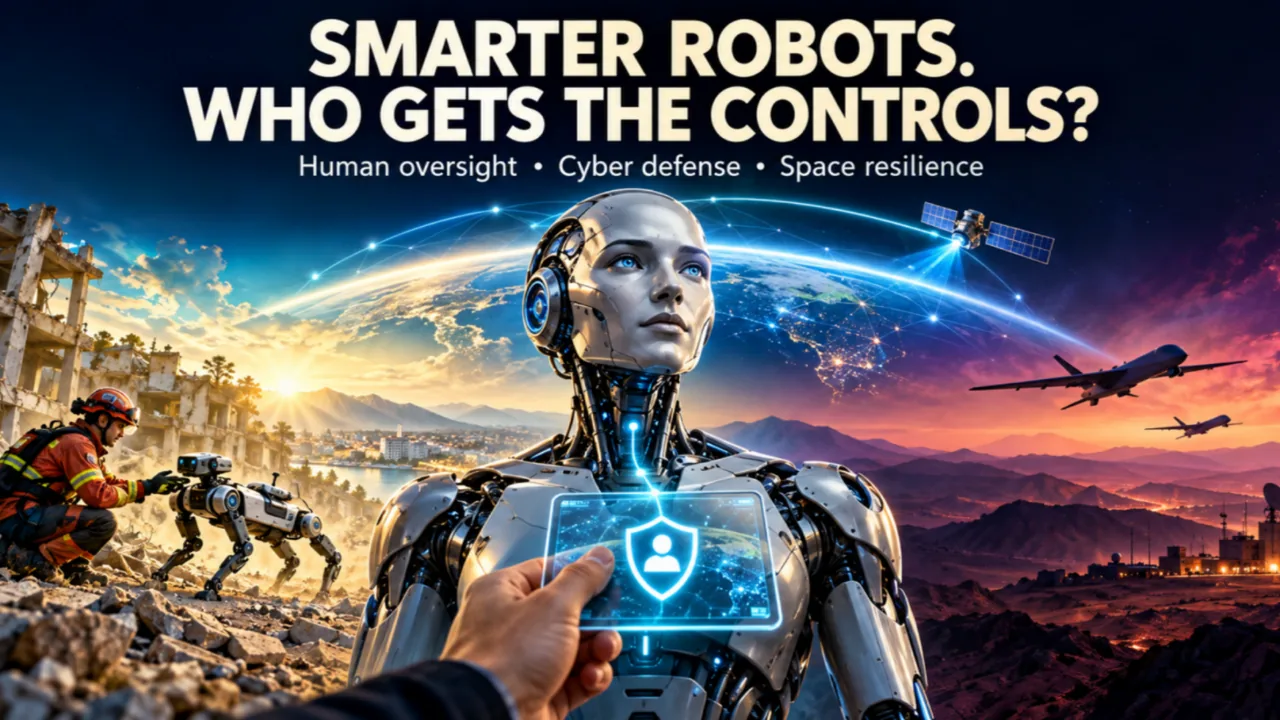
I can see extraordinary possibilities: machines entering burning buildings, helping people live independently, supporting surgery, and handling dangerous work.
I also keep coming back to a question: Who controls them, and who controls the people who control them?
As robots become more capable, the companies supplying their software, hardware, communications, and updates could gain enormous influence over our daily lives and national security.
Governments will still have responsibilities and authority. But dependence on a handful of private providers could give those businesses considerable power.
Before we become dependent, we should understand what happens when a provider changes its terms, withdraws support, suffers a breach, or simply gets something wrong.
My printer already refuses to cooperate when it dislikes an ink cartridge. I would prefer that business model stay away from machines responsible for human safety.
The stakes become much higher when robotics meets military force.
The Terminator question
Yes, I think about The Terminator.
I cannot honestly say that Skynet is inevitable or that we know how far autonomous systems will advance. A movie is a warning worth discussing, rather than evidence of what must happen.
But we should take the underlying concern seriously: machines operating with more authority than people can meaningfully supervise.
We do not need a robot to develop hatred for something terrible to happen. Faulty information, a compromised system, an unsafe objective, or a reckless human decision could be enough.
The International Committee of the Red Cross has raised serious concerns about weapons that select and engage targets without further human intervention, including the loss of human judgment over life-and-death decisions.
That deserves attention well before someone announces a product launch.
Future wars will involve more machines. Humans will still pay the price.
I expect cyber operations, drones, robotic systems, and AI to play a growing role in conflict. NATO is already testing drone and counter-drone technologies with industry and operational users.
We should also be precise: a remotely controlled drone and a weapon that independently selects targets represent different levels of autonomy.
I would be careful about predicting that humans will disappear from future battlefields. People will still make political decisions, maintain systems, fight, and suffer the consequences.
A war with fewer people operating weapons could still cause devastating human casualties.
I also worry that reducing the immediate risk to an attacker’s personnel could make the decision to use force easier. That is a risk we should debate openly.
Cyber defense becomes physical protection
When software controls a machine that moves through the world, cybersecurity becomes part of physical safety.
My view is that strong defense must combine secure software, protected communications, reliable equipment, trained people, and practical ways to limit or stop unsafe behavior.
An emergency-stop button matters. We also need to know whether it works when communications fail, whether someone can bypass it, and whether a human has enough time to intervene.
“Human oversight” needs to mean that someone has the information, authority, and time to make a real decision.
And then there is space
“Space: the final frontier.”
Captain James T. Kirk. William Shatner. Star Trek.
I nearly said Star Wars. Apparently, my first defense requirement is keeping my science-fiction franchises straight.
Space already supports essential military functions, including communications, navigation, intelligence, and missile warning. NATO explicitly recognizes those dependencies.
That means resilience must extend from the machine on the ground to the networks and satellites supporting it.
The rules deserve as much attention as the robots
Human history gives us plenty of reasons to expect technology to be used both constructively and destructively.
I believe we should invest in robotics and defensive capabilities while demanding clear accountability, independent testing, enforceable limits, and meaningful human control over the use of force.
Calling a system “defensive” should never excuse it from scrutiny.
I want the benefits robotics can bring. I also want us to make deliberate choices about who receives power, what they are permitted to do, and how society can challenge those decisions.
Before we teach a machine to say “I’ll be back,” I would like a clear answer about who can tell it to stop.
What authority should we never delegate to a machine?